Local Service Ads vs. Google Ads: Which Should You Run for Your Service Business?
Two different products. Two different positions on the search results page. Two very different ways of charging you money. Here is a plain-English breakdown of how each works, the honest pros and cons of both, and why the real answer for most service businesses is — run both.
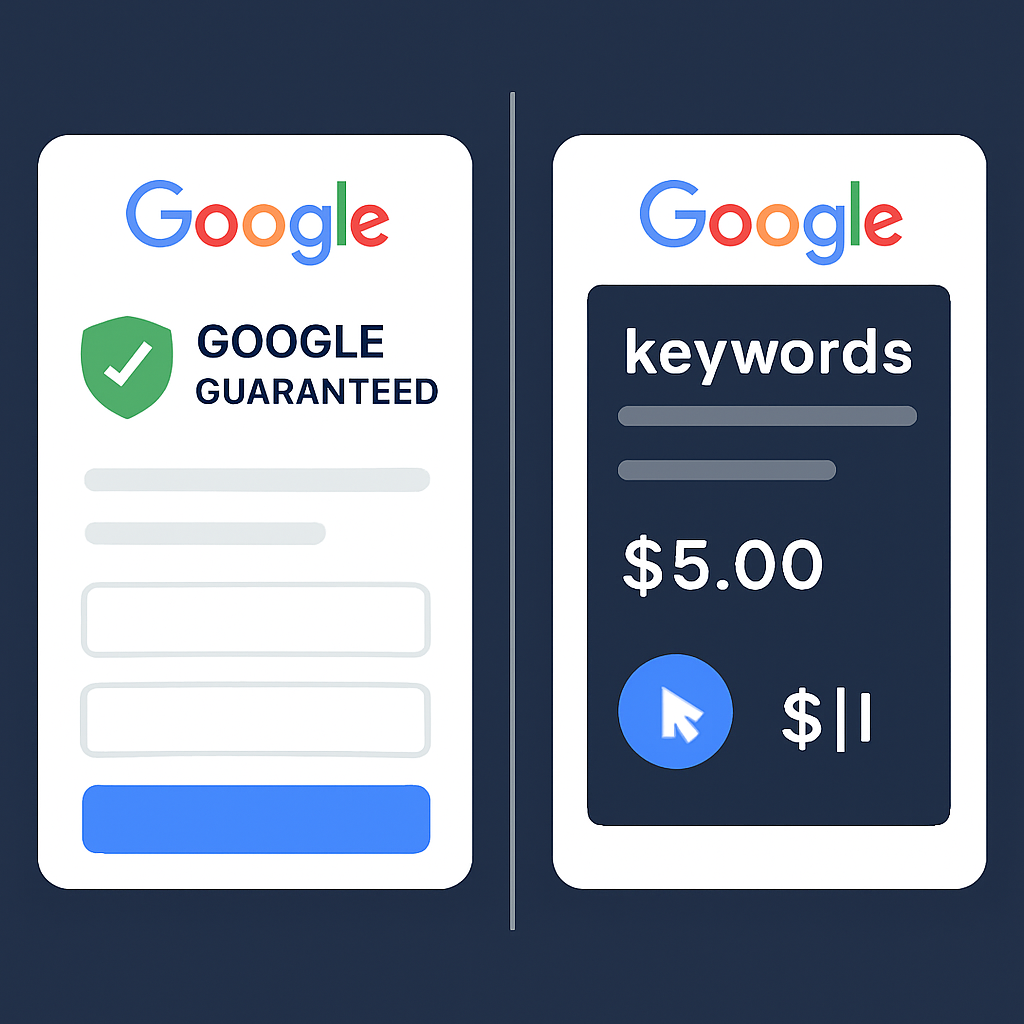
If your business qualifies for Local Service Ads, run them. They sit above everything else on the page, carry a trust badge, and you only pay for actual contacts. Then run Google Ads alongside them to cover more of the keyword universe, control your messaging, and scale. The two products are not competitors — they are complements. The businesses getting the most leads are running both.
What Are Local Service Ads?
Local Service Ads (LSAs) are Google's pay-per-lead product for service businesses. They appear at the very top of search results — above standard Google Ads and above organic listings — as a set of cards showing your business name, star rating, review count, and a Google Guaranteed or Google Screened badge.
The key distinction: you pay per lead, not per click. A lead is defined as a customer calling you, sending a message, or booking directly through the ad. If nobody contacts you, you pay nothing. If someone clicks but doesn't make contact, you pay nothing.
To qualify, your business and its employees must pass a background check, and you must verify your business license and insurance. This verification process is what earns the Google Guaranteed or Google Screened badge — and it is a meaningful trust signal that converts browsers into callers.
For home service businesses — HVAC, plumbing, electrical, cleaning, roofing, landscaping, and more. Backed by Google's satisfaction guarantee up to $2,000.
For professional services — lawyers, financial advisors, real estate agents, healthcare providers. Same verification, no satisfaction guarantee.
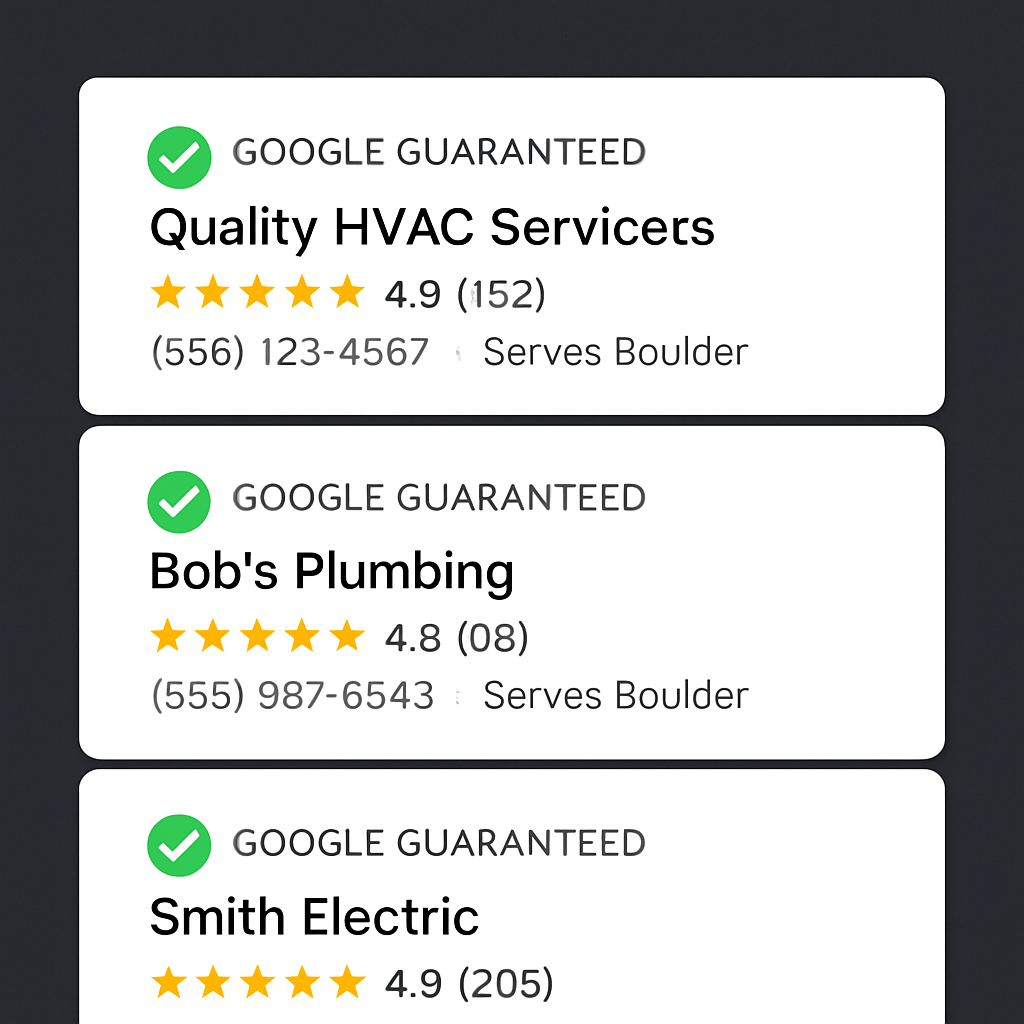
How Local Service Ads appear at the top of Google Search — above all other ads and organic results.
What Are Google Ads (for Service Businesses)?
Google Ads (formerly Google AdWords) are the standard pay-per-click text ads that appear below LSAs and above organic results. You bid on specific keywords — "HVAC repair Phoenix", "personal injury lawyer Scottsdale" — and pay each time someone clicks your ad.
Unlike LSAs, Google Ads give you full control: you write your own ad headlines and descriptions, choose which landing page to send traffic to, set bids by device and time of day, and exclude any keywords or audiences you don't want. That flexibility is both the appeal and the challenge — done right, it is the most powerful lead generation tool available to a service business. Done wrong, it burns budget fast.
Google Ads also have no eligibility requirements — no background check, no license verification. Any legal business can run them immediately. This makes them accessible to businesses that don't yet qualify for LSAs, or operate in categories Google hasn't yet added to the LSA program.
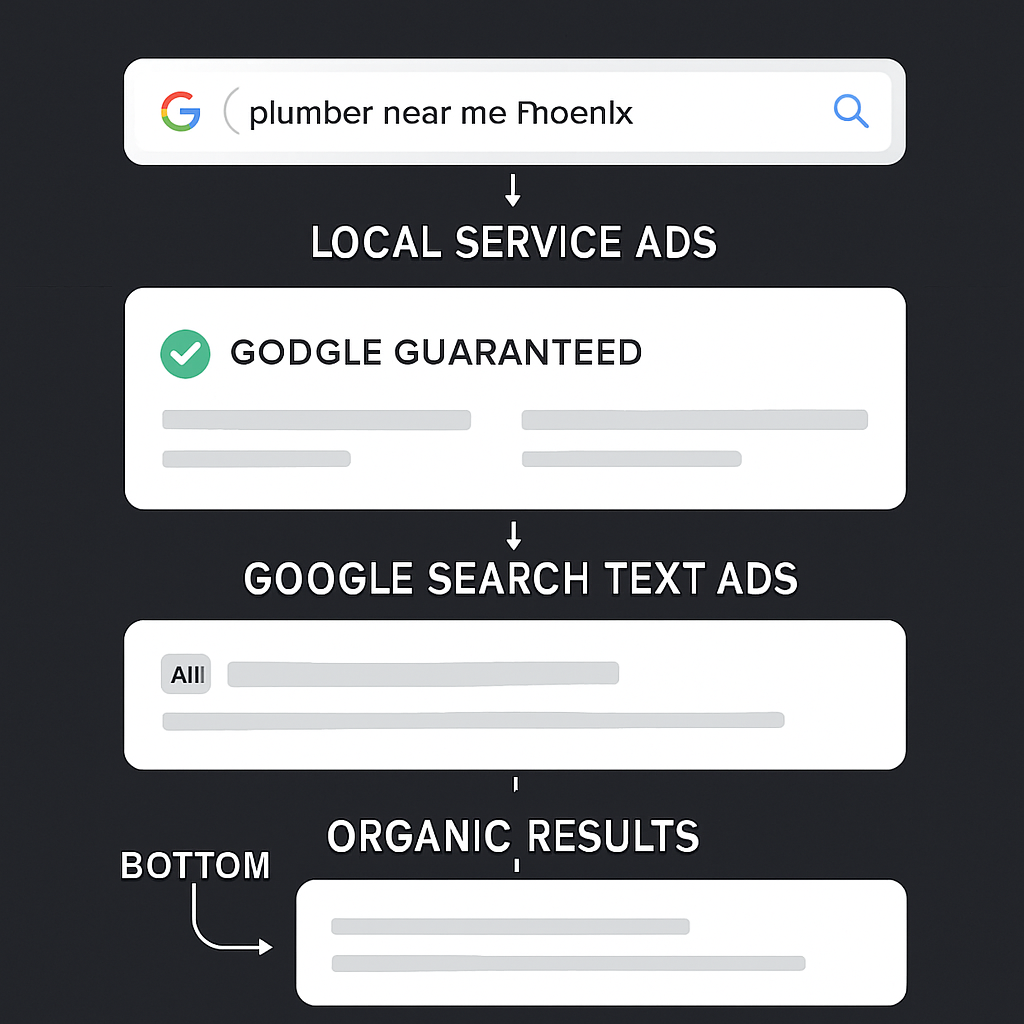
The Google SERP hierarchy: LSAs occupy position zero, above all paid text ads and organic results.
Head-to-Head Comparison
Every major difference between LSAs and Google Ads, side by side.
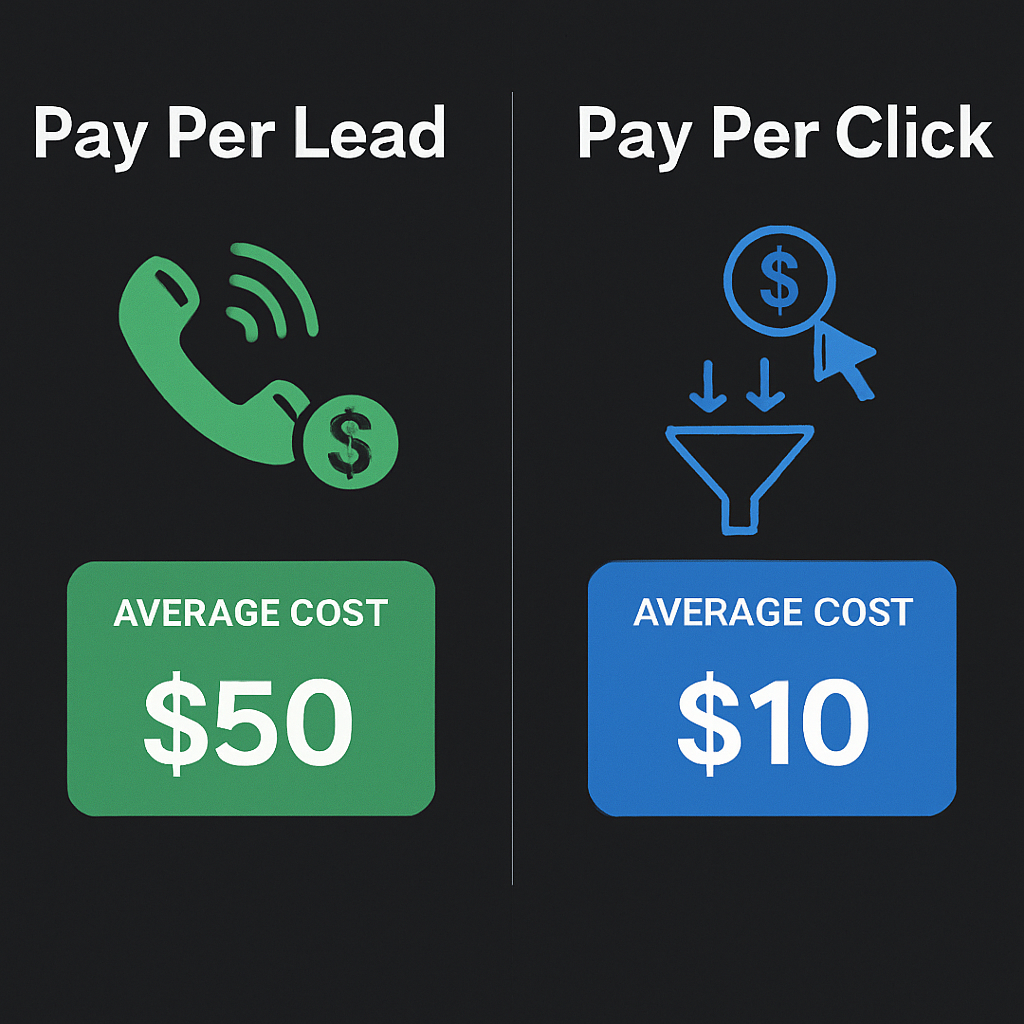
LSAs charge per lead (phone call or message). Google Ads charge per click — whether the visitor converts or not.
Local Service Ads — Pros & Cons
Tap any item to read the full explanation. The pros are real — so are the limitations.
Google Ads — Pros & Cons
Google Ads is where most of the complexity — and most of the upside — lives for service businesses.
Which Strategy Fits Your Industry?
Select your industry to see a tailored recommendation and a fit score for both platforms.
Lead Estimate: LSA + Google Ads Combined
Adjust your monthly budget and industry to see a rough estimate of how many leads a combined strategy could generate.
See roughly how many leads a combined LSA + Google Ads strategy could generate at your budget.
Estimates based on industry averages. Actual results vary by market, competition, and campaign quality. A 60/40 Google Ads to LSA split is assumed.
Why the Answer Is Usually Both
LSAs and Google Ads target the same searcher at different moments in the decision journey, and they occupy different real estate on the same page. Running only LSAs leaves you invisible on queries that don't trigger LSA results. Running only Google Ads leaves the prime trust-badge position at the top of the page to your competitors.
Think of it this way: LSAs are your highest-trust, lowest-friction lead channel — a customer calls you directly after seeing the Google Guaranteed badge and your 4.9-star rating. Google Ads are your volume and precision engine — they let you target specific services, specific locations, specific times of day, and send traffic to a page designed to convert at the highest possible rate.
The businesses generating the most inbound leads from Google are not choosing between the two. They are running LSAs to own the top of the page, running Google Ads to cover everything else, and making sure their conversion tracking is tight enough to know what is working.
Complete the verification process, connect your Google Business Profile, and start collecting reviews. LSAs can be generating leads within 2–3 weeks of setup.
Focus on bottom-of-funnel service + location keywords. Write your own ad copy, build a dedicated landing page, and set up conversion tracking before spending a dollar.
Google Ads needs data to optimise. LSA rankings improve as your review count and response speed increase. Give both time to stabilise before drawing conclusions.
Track what each channel costs per actual customer acquired, not just per lead. LSA CPL looks cheaper on paper, but if Google Ads leads close at twice the rate, the comparison flips.
What Goes Wrong (And How to Avoid It)
Most service businesses who try one or both and see poor results make the same set of mistakes.
Running Google Ads without proper conversion tracking is like driving with no dashboard. You have no idea which keywords, ads, or landing pages are generating leads — so you can't optimise anything. Set up call tracking and form tracking before spending money.
LSA rankings are heavily influenced by your review count and recency. A competitor with 80 reviews beats you with 20 reviews in the same category — even if your budget is higher. Build a systematic review collection process from day one.
Your homepage is designed for people who already know you. A searcher who clicked 'HVAC repair Phoenix' needs a page that speaks directly to their situation, your response time, your service area, and your offer. Homepage traffic from paid ads converts at 30–50% the rate of a dedicated landing page.
LSAs rank partially based on budget. A $200/month LSA budget will not compete against competitors spending $1,000+. If you are going to test LSAs, budget enough to actually appear consistently — otherwise the test is meaningless.
LSA gives you the ability to dispute leads that don't match your service category, were spam calls, or were wrong numbers. Many businesses don't use this feature — which means they are paying for leads that should be refunded. Review your leads weekly and dispute anything that qualifies.
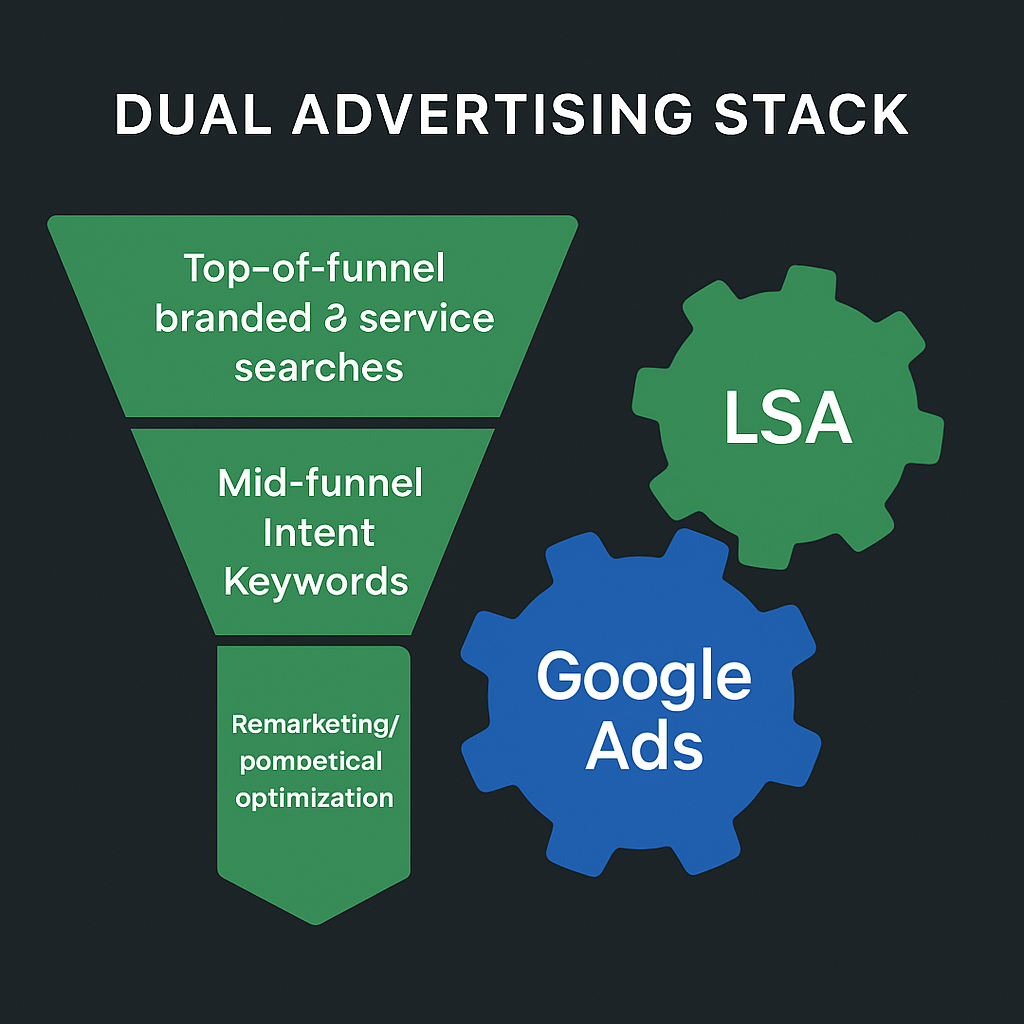
The dual-stack approach: LSAs capture top-of-funnel branded searches, Google Ads own the long-tail mid-funnel keywords.
Frequently Asked Questions
The questions we hear most often from service business owners about LSAs and Google Ads.
Ready to Set Up LSAs + Google Ads for Your Business?
Casaccio Media sets up and manages both Local Service Ads and Google Ads for service businesses across Phoenix and Scottsdale. Drop your details below and we will be in touch.